


















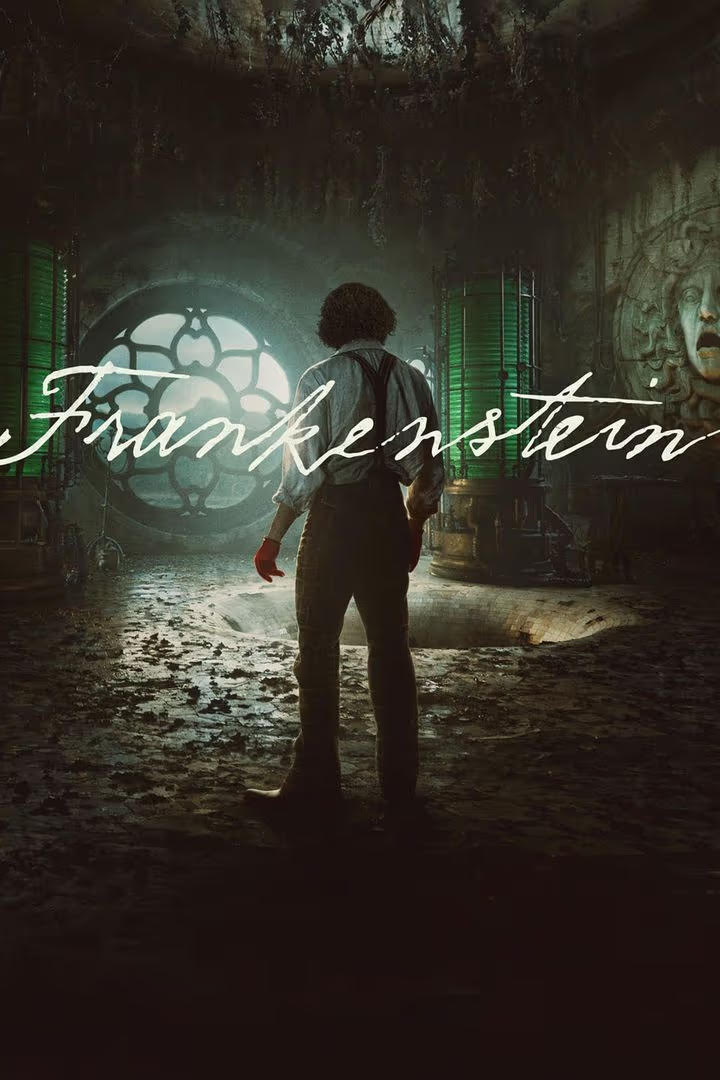
There have been various interpretations of Mary Shelley‘s renowned novel Frankenstein, a tale that’s centered around the mad scientist Victor Frankenstein and his creation, the creature. However, Guillermo del Toro‘s new film promises shocking horror, intense twists, and many contributing elements to several themes —such as alienation, isolation, and nature vs. nature —surrounding the Gothic truth about Shelley‘s creation. I will admit, the film does exaggerate the gore of this eerie novel, but overall, Del Toro did a fantastic job of paying homage to Frankenstein, while also incorporating his own vision and spin on it. From the long-dedicated hours spent on makeup, extremely detailed effects and carefully constructed plot structures which mirrors Shelley‘s novel, Del Toro shocks us with his adaptation of Frankenstein.
Almost parallel to Shelley herself, Del Toro had a very peculiar attraction to death and the creepiness around Shelley‘s novel. According to NPR, Del Toro was originally inspired by the original 1931 film that he watched growing up. From that point on, it was then that he decided one day he would have his own spin on Frankenstein, while also being one of the only films that most accurately portrays the novel. He has cultivated this film ever since he was young, much like how Victor Frankenstein went about challenging the course of nature by raising the dead and creating life through his creature. For Del Toro, the film is his creation, except it’s a very precious thing to him, which unfortunately cannot be said the same for Victor and the creature.
Del Toro considered many important aspects that make up his film, one of which being the cast. For the most part, he introduced his cast in 2023, several stars such as Oscar Isaac (Victor Frankenstein) and Mia Goth (Elizabeth Harlander) were announced; however, Del Toro’s original plan was for Andrew Garfield to play the creature, but Jacob Elordi was added to replace him due to Garfield‘s schedule conflict. Nonetheless, Elordi was absolutely phenomenal as Victor‘s creation and has fans raving over his performance.
While the film is parallel to the storyline of Frankenstein, there are some misconceptions and times when Del Toro‘s film strays off to its own path. Similar to how the creature embarks on his own journey when Victor abandons him, Del Toro forges his own path, which alters some particular details that occur in the novel. What stays true in the movie is that we follow the point of view of Victor Frankenstein and his creation. We are introduced to the backstory of Victor and how he yearns to defy the laws of nature by creating life from death. After the loss of his mother and the birth of his younger brother, he is heavily motivated to make his impact on the world, but is plagued by his own hubris. After the animation of his monster, both of their perspectives are intertwined and split, just like in Shelley‘s novel. However, there are some important differences that are displayed in the film. For example, Elizabeth is engaged to Victor‘s brother, rather than being his love interest. Additionally, the movie is much more brutal than the novel, where Victor loses his leg when his laboratory explodes in an attempt to destroy his creation. Despite these additions, Del Toro does an excellent job of incorporating Shelley‘s gothic literature, while also setting up a beautiful story of love, pursuit of connection and science fiction.
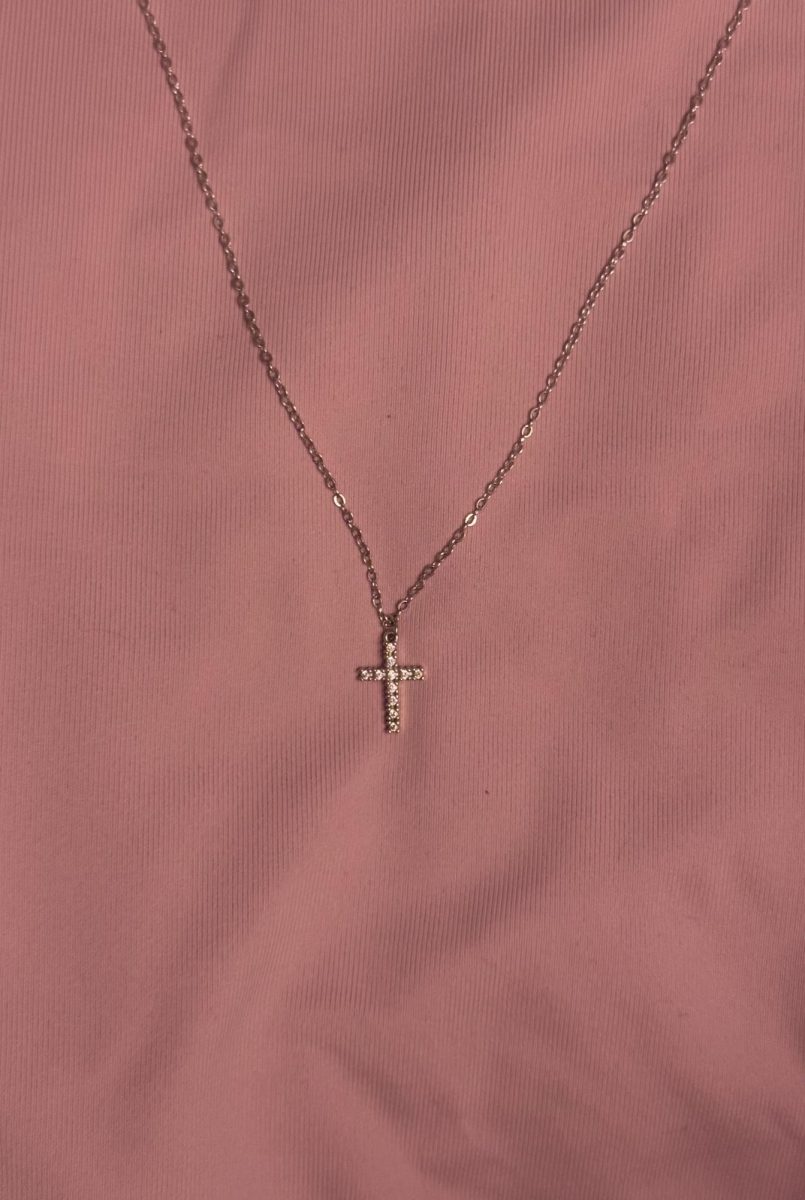
Aside from the plot of the movie, Del Toro‘s film displayed several amazing pieces of set design and costumes. According to Timeout Worldwide, the movie, for the most part, was filmed in an eastern region of Scotland. The production team also wanted to focus on the Victorian era of the novel by honing in on costume designs centered around that time period. For example, Elizabeth had several costumes with veils, long dresses and a classic cross necklace, which was present throughout the film. In addition, they focused on a gothic and muted color palette, which really electrifies the audience into the horror and eeriness of the film. Personally, I thought this was very effective. I definitely kept it in mind throughout the movie, and it was close to what I envisioned while reading Frankenstein.
For the most part, the film offers tribute to many themes that are focused on in the novel, such as the consequences of your actions, the quest for knowledge and the dynamic of ownership and owned. But the most prominent theme that Del Toro wanted to shine a light on was the relationship between father and son, a theme that isn’t really explicitly expanded on in Shelley‘s tale. To clarify, Shelley depicts Victor and the creature as two distinct, unrelated characters that have an intense and complex relationship. However, in the movie, Del Toro builds on the idea of Victor and the creature being father and son, and Victor even calls him that in the end of the film. While this was not true in the book, I thought it was really interesting and powerful to add that particular choice since it altered the entire tale in a fascinating light.
Throughout the two and a half hours I spent at the movie theatre, I walked out feeling complete thrill and fulfillment. From the shocking and thought-provoking visuals to the bittersweet ending of Victor‘s death, this movie had an exhilarating effect that left me absolutely astonished by the end of the film. The set, costumes and plot all came together seamlessly. I strongly recommend giving this movie a watch, especially for high school students starting Frankenstein!