






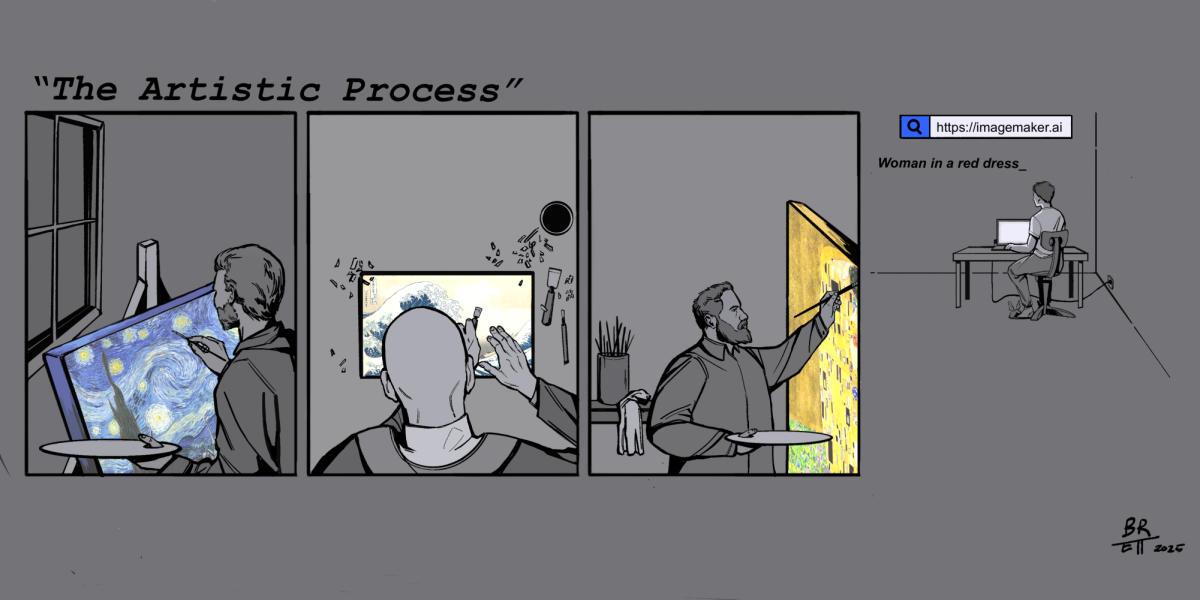






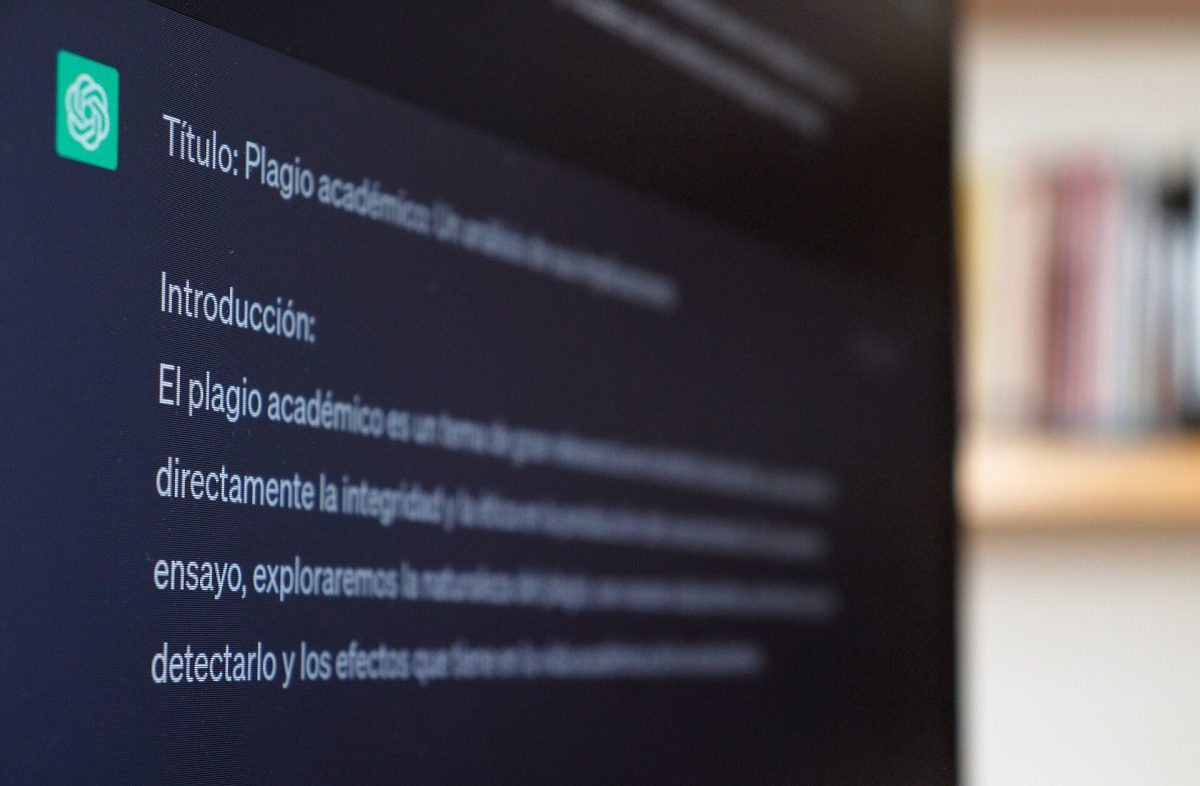





On November 30, 2022, OpenAI released ChatGPT, accelerating the AI boom that is now in full effect. AI has changed the way people write emails, complete work and even complete school assignments. It is no secret that many students across the country use chatbots like ChatGPT to assist them with their work. According to College Board, 84% of students admit to using generative AI for schoolwork. Across the country, educators point to AI as a potential threat to students’ cognitive development. At Groves, teachers have had to adapt to the growing presence of AI in their classrooms.
Although many teachers do not allow the use of AI on assignments, Groves business teacher Mrs. Haener believes that allowing students to use AI in certain cases can be beneficial.
“When we go over pricing techniques, I explain it, and then I have students use AI to help find real-life examples. AI can point out examples so students can see how actual businesses use those pricing strategies,” Haener said.
Groves English teacher Mr. Crimando has also allowed students to use AI on some assignments.
“I used it in philosophy to test its boundaries and explore the idea of consciousness or sentience within something like a machine or algorithmic program,” Crimmando said.
Although these teachers see benefits in certain situations, they also point out that AI can be a barrier to student learning.
“If they are just getting all of their ideas through ChatGPT, it hinders their creativity and critical thinking,” Haener said.
Crimando expressed similar concerns.
“If you’re over-reliant on AI, you will not be able to formulate your thoughts effectively. If you’re using it to generate everything, you’re relying on a machine instead of your own creativity,” he said.
AI has also changed how teachers design and grade assignments.
“I make my students submit a link for their advertisements so I can look at the actual process of them making it. If I see a lot of students have the exact same answer, it is likely AI-generated because it produces similar responses,” Haener said.
“We use something called revision history, which helps us check for large pastes and copied work. AI checkers are notoriously unreliable because of false positives, so I do not rely on them heavily,” Crimando said.
AI has changed the education system rapidly since chatbots gained popularity. While students are often discouraged from using AI and encouraged to think independently, teachers do not believe AI has no place in education. Although educators point out the risks AI poses to student learning, they also acknowledge that it can be beneficial when used appropriately.