
















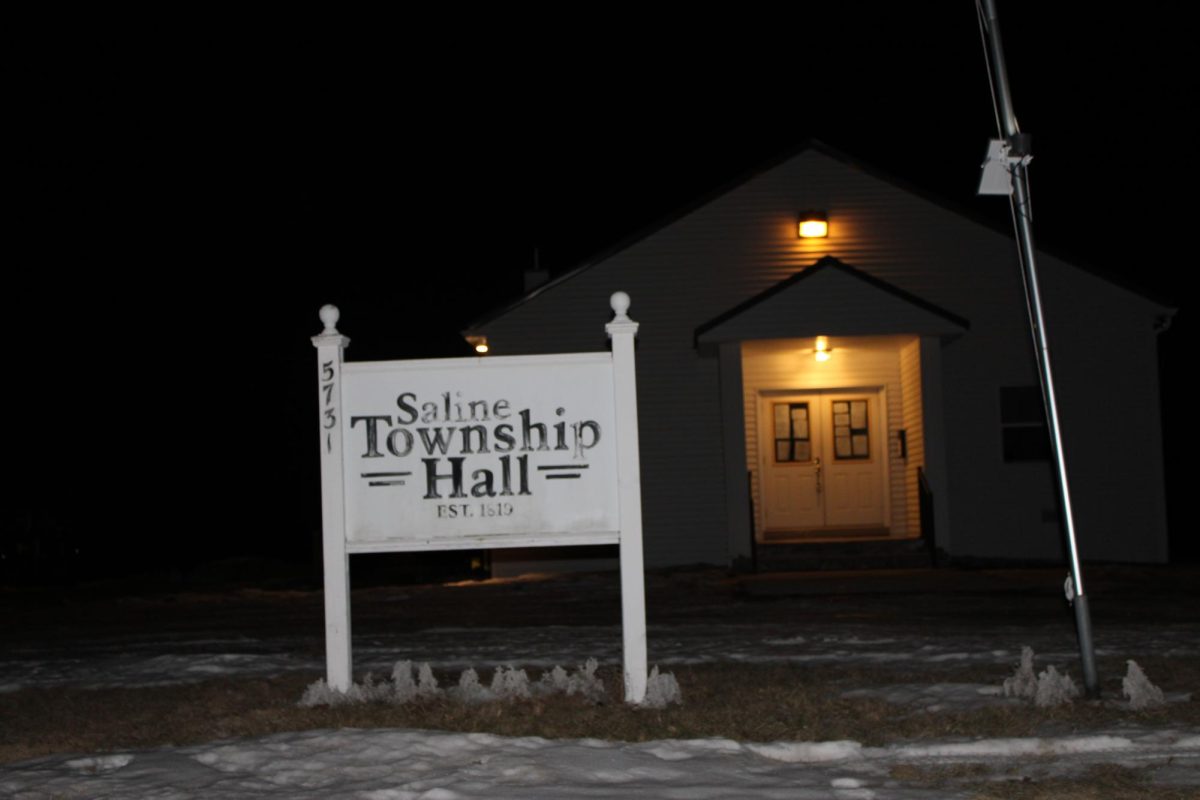


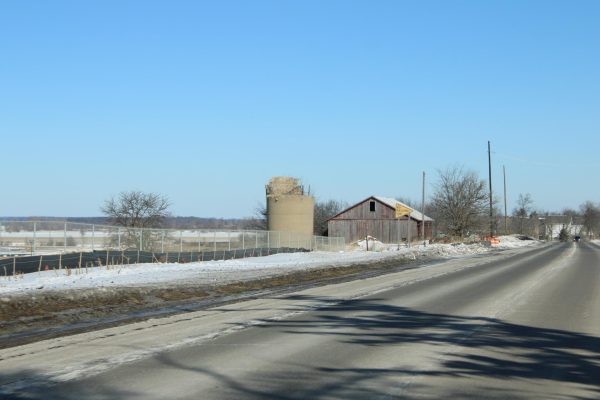
SALINE TOWNSHIP, Mich. — Farmers are often described as the backbone of America, and in Saline Township, agriculture plays a central role in the community. The township describes itself as a “small, agricultural township” that “continues to promote and preserve the environment,” according to its website.
Recently, however, the community has faced controversy over “Stargate,” a $7 billion AI data center project backed by Oracle, OpenAI and Related Digital. The proposed development has drawn opposition from residents concerned about land use, infrastructure strain and environmental impacts.
After the project was announced Oct. 30, residents organized protests, held meetings and attempted to prevent the project from moving forward.
On Jan. 14, Saline Township voted to rezone up to 575 acres where portions of the project would be located. Two weeks later, on Jan. 28, the township reversed its decision.
A couple of months earlier, Related Digital sued the township after officials denied a rezoning request that would allow the company to use land it had purchased for the project rather than restrict it to agricultural use. The lawsuit was later settled, and the project appears set to proceed.
The township’s agreement with DTE Energy has also raised concerns. DTE Energy announced it would supply up to 1.4 gigawatts of power for the project. Some residents have questioned whether the development could increase electricity rates or strain the electrical grid. The agreement was approved without a public hearing, prompting criticism from opponents.
“Stargate” is also the name of a $500 billion joint venture announced in January 2025 by President Donald Trump. The initiative includes OpenAI CEO Sam Altman, Oracle Chairman Larry Ellison and SoftBank CEO Masayoshi Son. The project aims to expand AI data center infrastructure across the United States and internationally.
Since its announcement, critics nationwide have expressed concerns about potential environmental impacts, economic effects and energy usage.
Saline Township, home to fewer than 3,000 residents, includes extensive farmland that shapes the local economy. The township also contains multiple high-voltage transmission lines that DTE Energy plans to use to help supply power to the facility. The proposed site is near U.S. 12, a major east-west corridor in southern Michigan.
Township officials announced during the week of Feb. 9 that traffic is expected to increase along U.S. 12 and Michigan Avenue as construction begins, including heavy truck traffic for foundation work. Some residents have expressed concern that congestion could continue after the facility becomes operational.
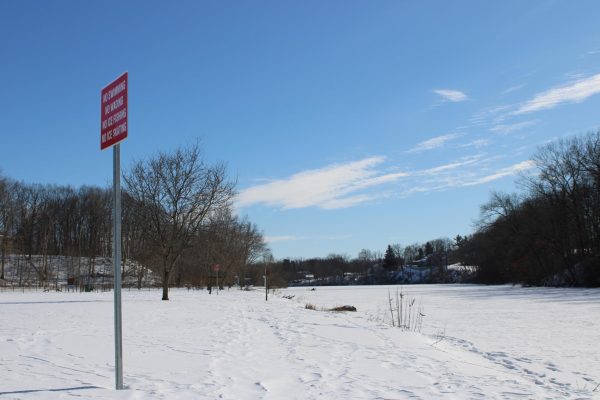
Environmental concerns have also emerged. According to Bridge Michigan, the data center could require millions of gallons of water daily for cooling. Critics have also questioned whether discharge from the facility could affect nearby wetlands and waterways, including the Saline River and the Saline Mill Pond.
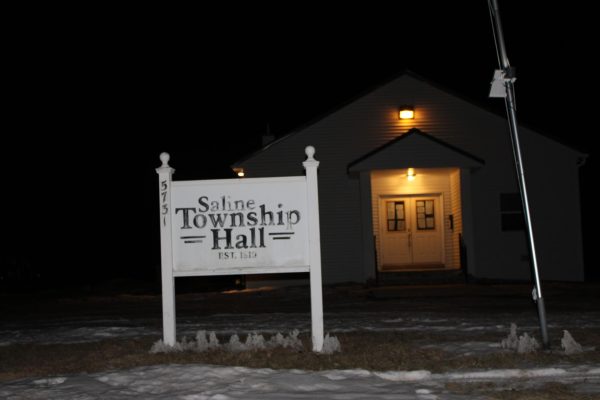
On Feb. 11, the township held its monthly board meeting, drawing a large crowd of residents, guests and Related Digital representatives. Both supporters and opponents of the project encouraged turnout.
Residents voiced concerns about traffic, construction noise, environmental risks and legal precedent. A mediator between county officials and Related Digital addressed some of the concerns, prompting reactions from members of the audience.
During public comment, individuals were given three minutes each to speak. Many attendees wore “No AI Data Center” shirts and referenced the Rural Michigan Defense Fund, which describes itself as an organization designed to help “rural communities fight industrial-scale development through lawful action and litigation support,” according to its website.
As the meeting continued, board members at times asked attendees to remain orderly after some demanded direct responses from Related Digital representatives. The company’s representatives did not speak publicly during the meeting. After approximately 1 hour and 15 minutes, the meeting adjourned at 8:15 p.m.
Saline Township now finds itself part of a broader national conversation about large-scale data center development in rural communities. Similar projects across the country have prompted debate over economic growth, environmental protection and local control.
Residents of Saline Township and neighboring communities continue to organize, whether through protests, attendance at public meetings or broader advocacy efforts at the state level, as the project moves forward.